

You will probably have seen our DVS photographer, Adrian Giddins, at many village and DVS events. We keep photographic records of our activities and use these to illustrate our newsletter and website. They are also added to the DVS Photo Archive which is a unique set of images, collected and managed for many years by Rob Gordon and more recently by Adrian. (Please let us know if you don’t wish any photos of yourself to be used.)
WHAT NEXT?
The DVS Committee is always on the lookout for ideas for talks, visits and events. If you have any suggestions, know of a good speaker or an interesting venue, or if you’d like us to repeat something you missed, please get in touch.
DVS ANNUAL GENERAL MEETING: 24 APRIL 2025
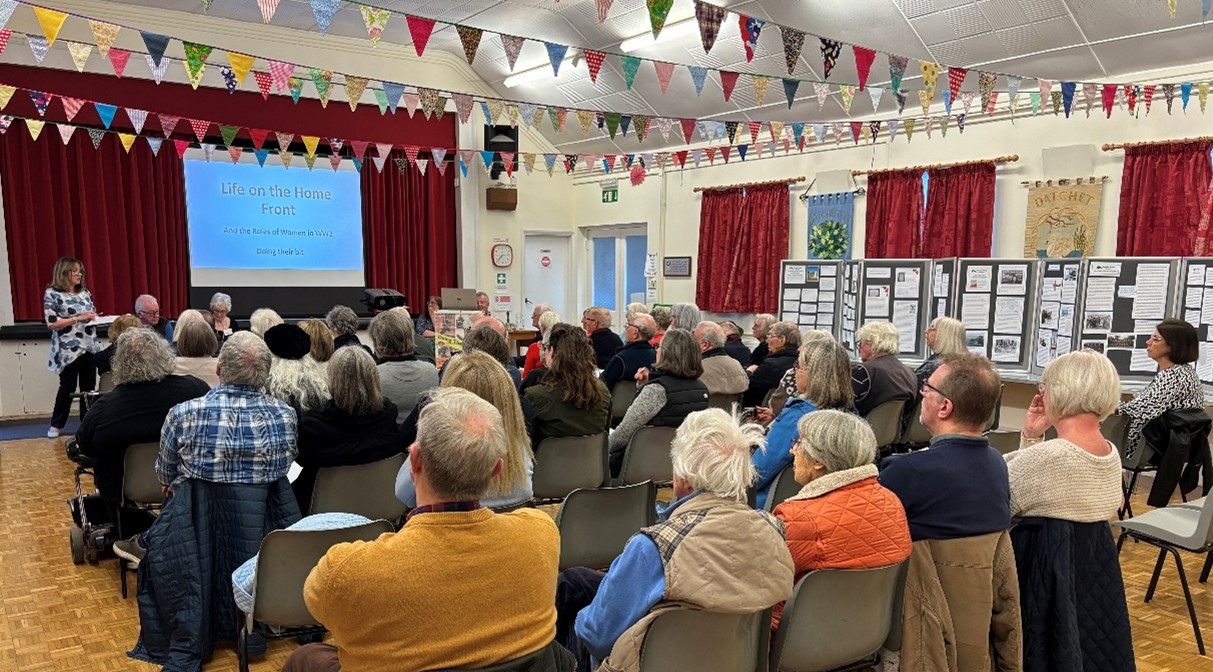 Many thanks to everyone who joined us for this year’s AGM. As usual, we quickly covered the ‘business’ section of the meeting, discussing our finances and membership – which are both in good health – and Alison spoke about our activities during the previous year and plans for the next.
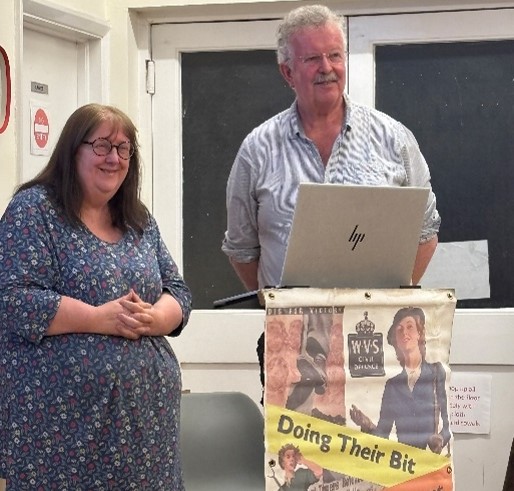
The highlight of the evening was a fascinating talk about ‘Life on the Home Front’ by Karen and Bret Wiles of ‘Doing Their Bit’, arranged to coincide with the commemorations and celebrations of the 80th anniversary of the end of WWII. We were delighted with the positive feedback we received, which we passed on to Karen and Bret.
Thank you, too, to everyone who stayed afterwards to enjoy a drink and a chat and to view the exhibition. DVS had created a display about life in Datchet during WWII. This included information about the evacuees who came here and the memories of one young evacuee who learned to swear at the village school! There was information about Datchet’s Home Guard, too, and the personal recollections of 100-year-old resident Les Smith who served with them. We also presented information about the 30 men who are remembered on our war memorial and the names of others who perhaps should be commemorated, including a soldier who is buried in Ditton Road Cemetery with a Commonwealth War Graves Commission headstone.
Wartime defence was covered: the important top-secret work at Ditton Park; the anti-aircraft gun post at Datchet Common; the Datchet designer of a flame-thrower tank; the Hawker Aircraft Company at Langley where Hurricanes were built; the Battle of Britain Bunker at Uxbridge from where the Battle of Britain was coordinated; and more.
We had a map showing where bombs were dropped on Datchet; details of monies raised by the schoolchildren’s Spitfire Fund, and a photo of Billingsgate fish market on North Green. We also discovered that the materials for a 120-ft Thames bridge were stored somewhere in Datchet during the war. (If you know where, please get in touch!)
Among the newspaper cuttings on display were descriptions of VE Day 1945. On 8 and 9 May, huge crowds gathered on the Green, bonfires were lit in front of the school, an effigy of Hitler burned, and there was singing and dancing till dawn. In the weeks that followed, rations were pooled so the children could enjoy victory tea-parties, too.
-
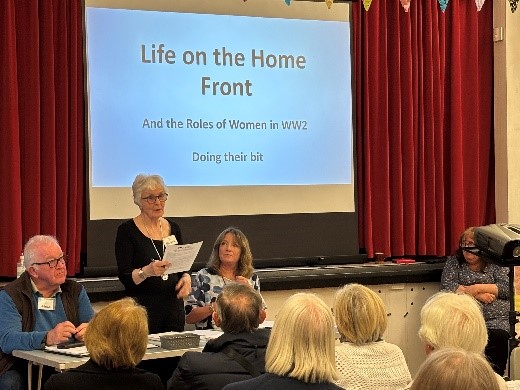
- Karen and Bret shared some astonishing facts in their audio-visual presentation, not only about what life was like for people on the home front during the war but also about the enormous variety of roles available to women.
-
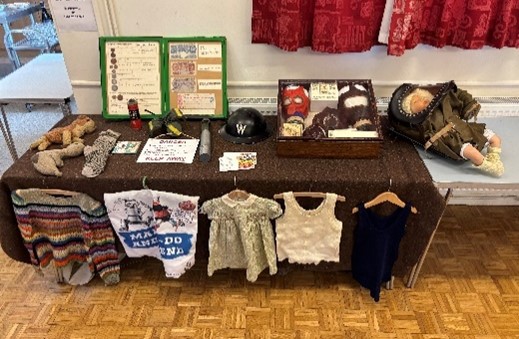
- They brought with them a display of wartime artefacts, including a baby’s gas mask, knitted toys and clothing.
-
- During the business section of the meeting, Marjorie, DVS secretary, appealed for volunteers to take on the roles of membership secretary and treasurer. Please get in touch if you can help
CLEANING SERVICEMEN’S HEADSTONES, JUNE 2025
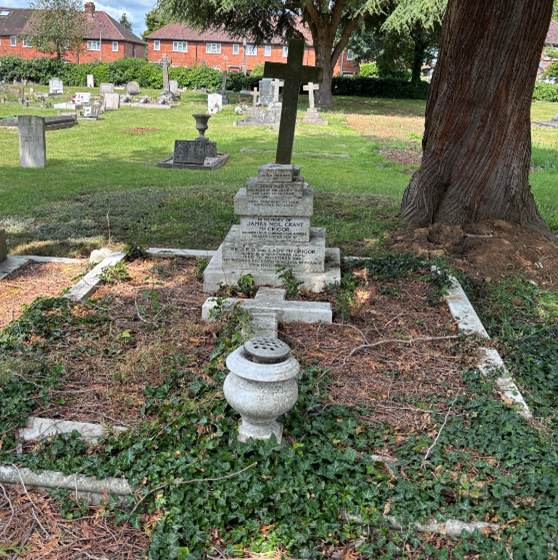
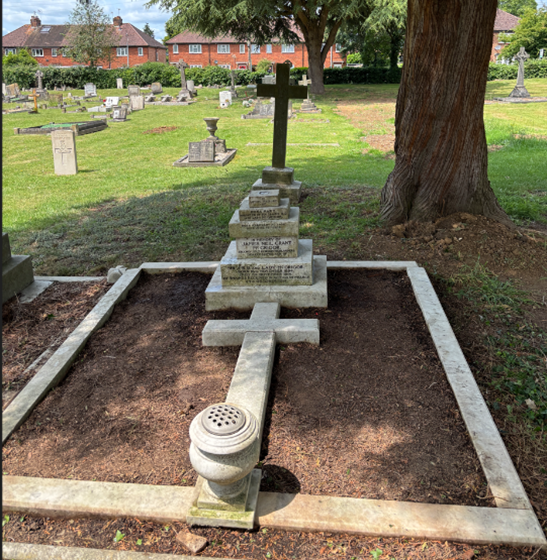
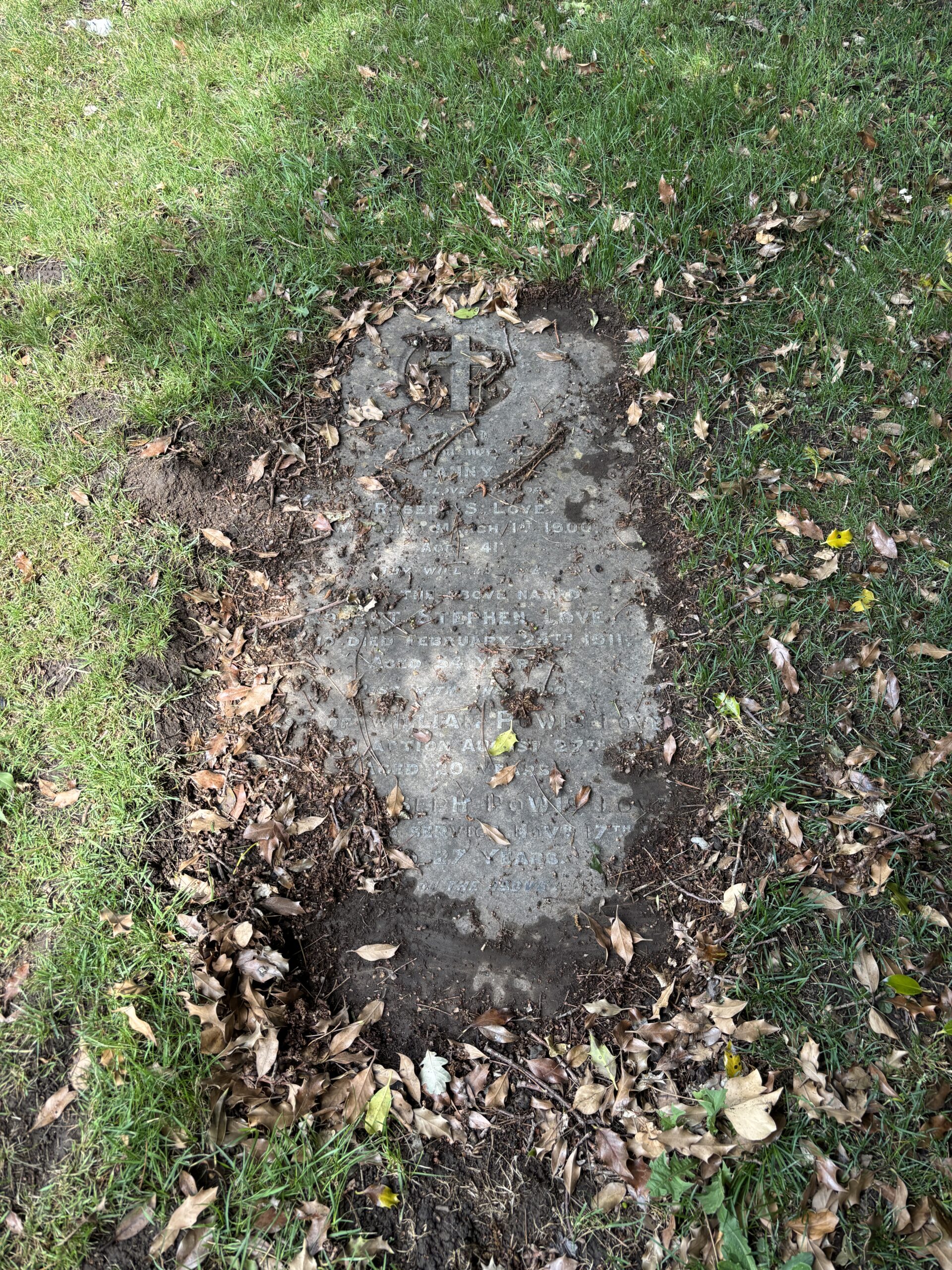
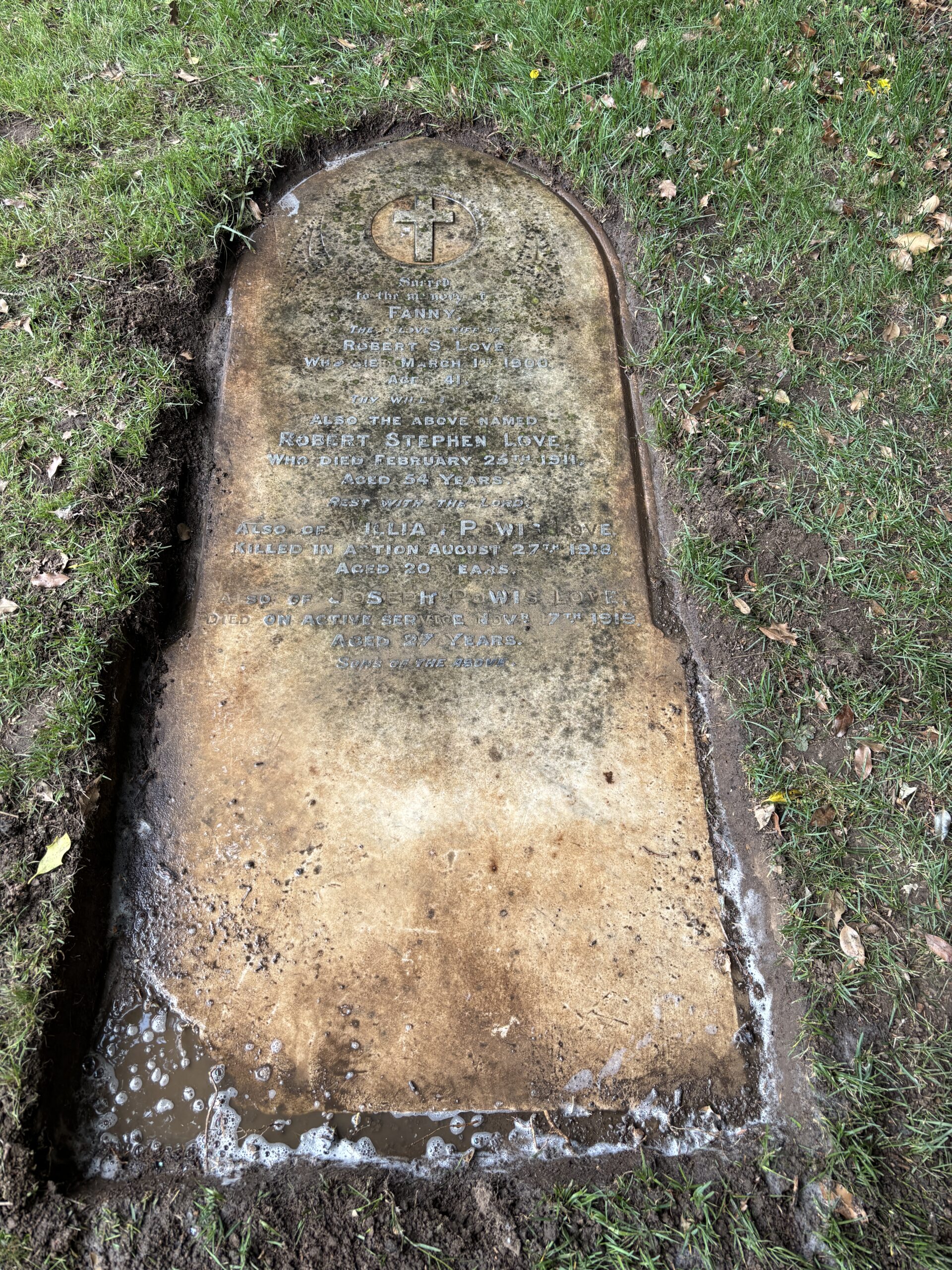
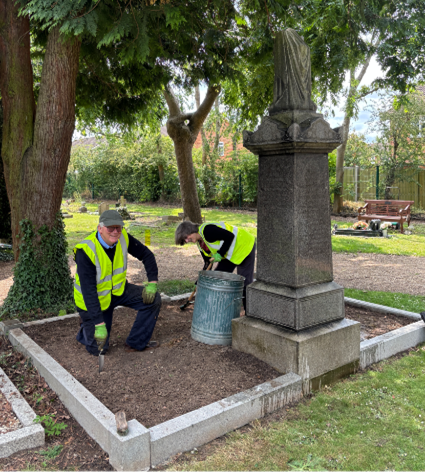
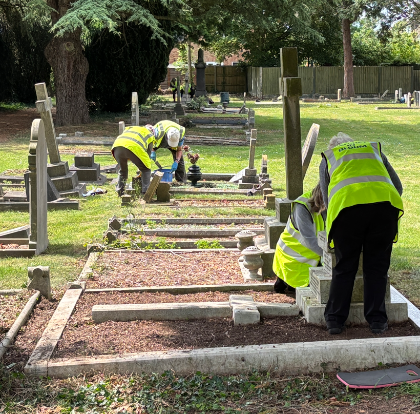
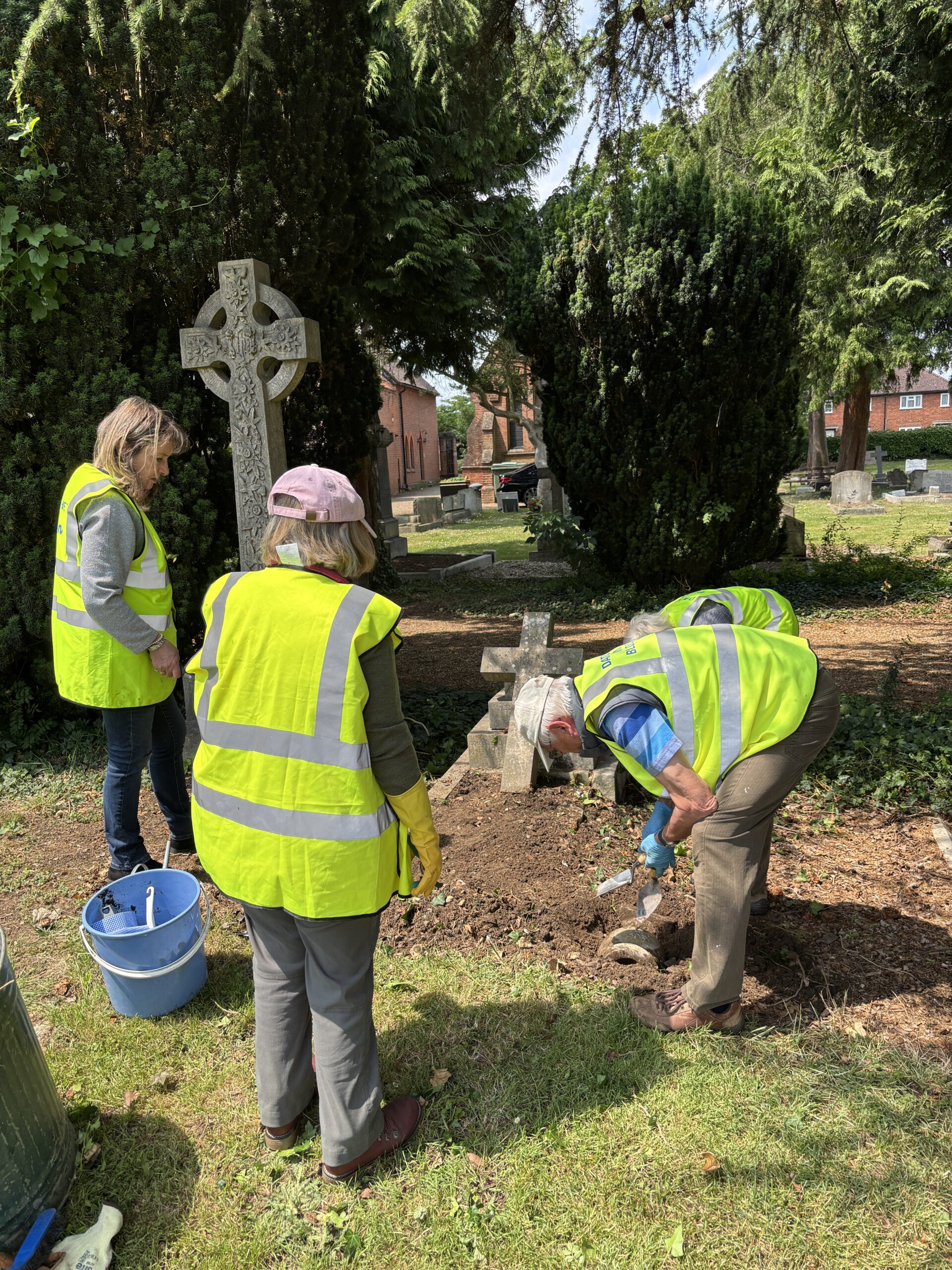
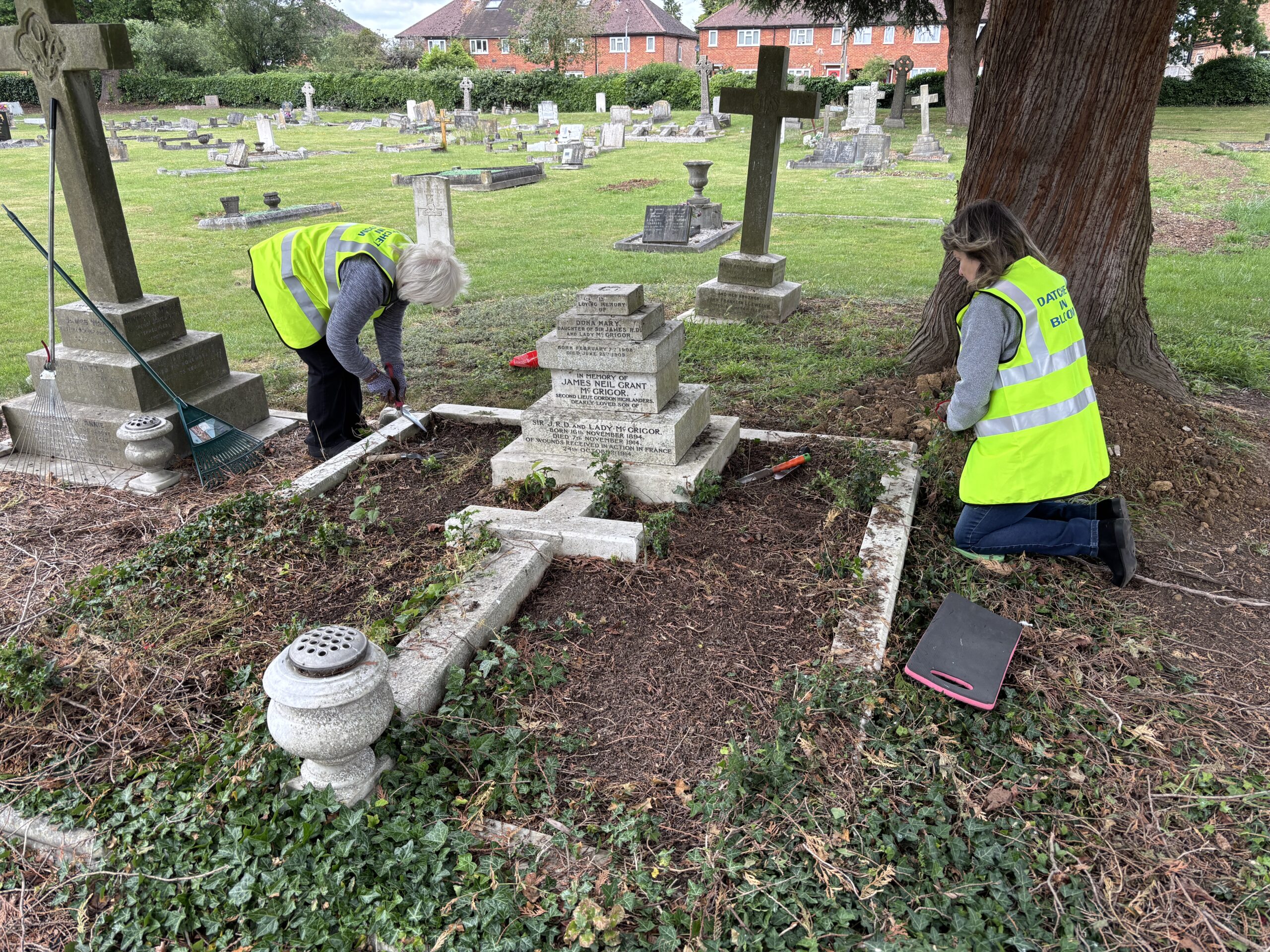
In Ditton Road cemetery, there are graves of servicemen who served in WWI and WWII. Datchet Village Society received permission from the parish council to honour these men by cleaning those headstones which are not maintained by the Commonwealth War Graves Commission. (See the Datchet in WWI and WWII section of this website for details of these servicemen: https://www.datchetvillagesociety.org.uk/datchet-in-wwi/wwi-graves-in-datchet/)
A small but determined group of DVS members started cleaning these on 8 June.
-
- Before…
-
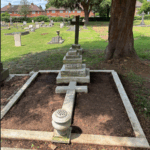
- After…
-
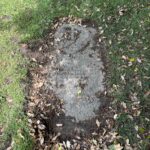
- Before…
-
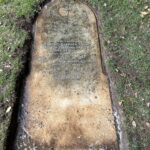
- After
THE BLUE PLAQUE IS INSTALLED, JULY 2025
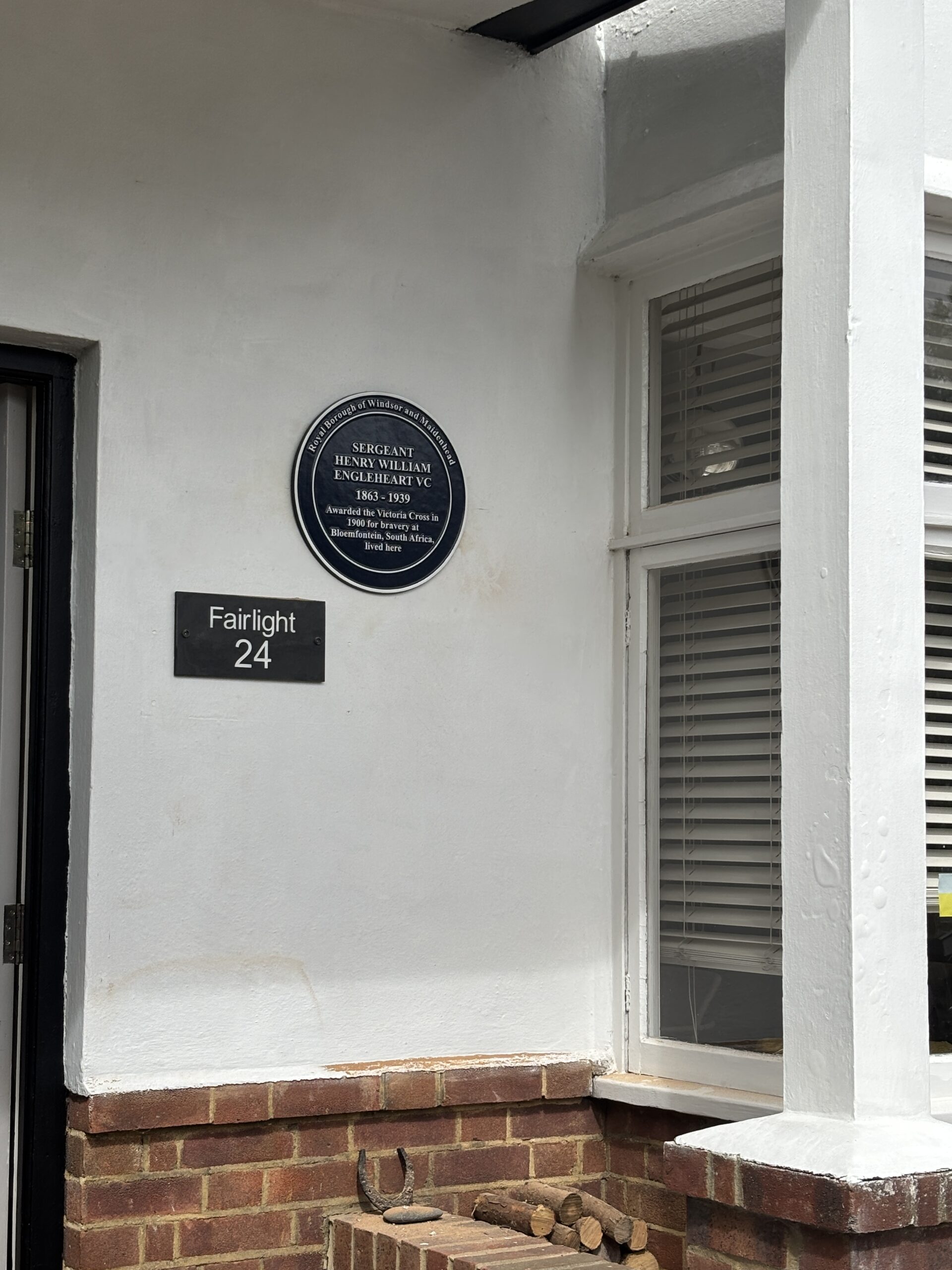
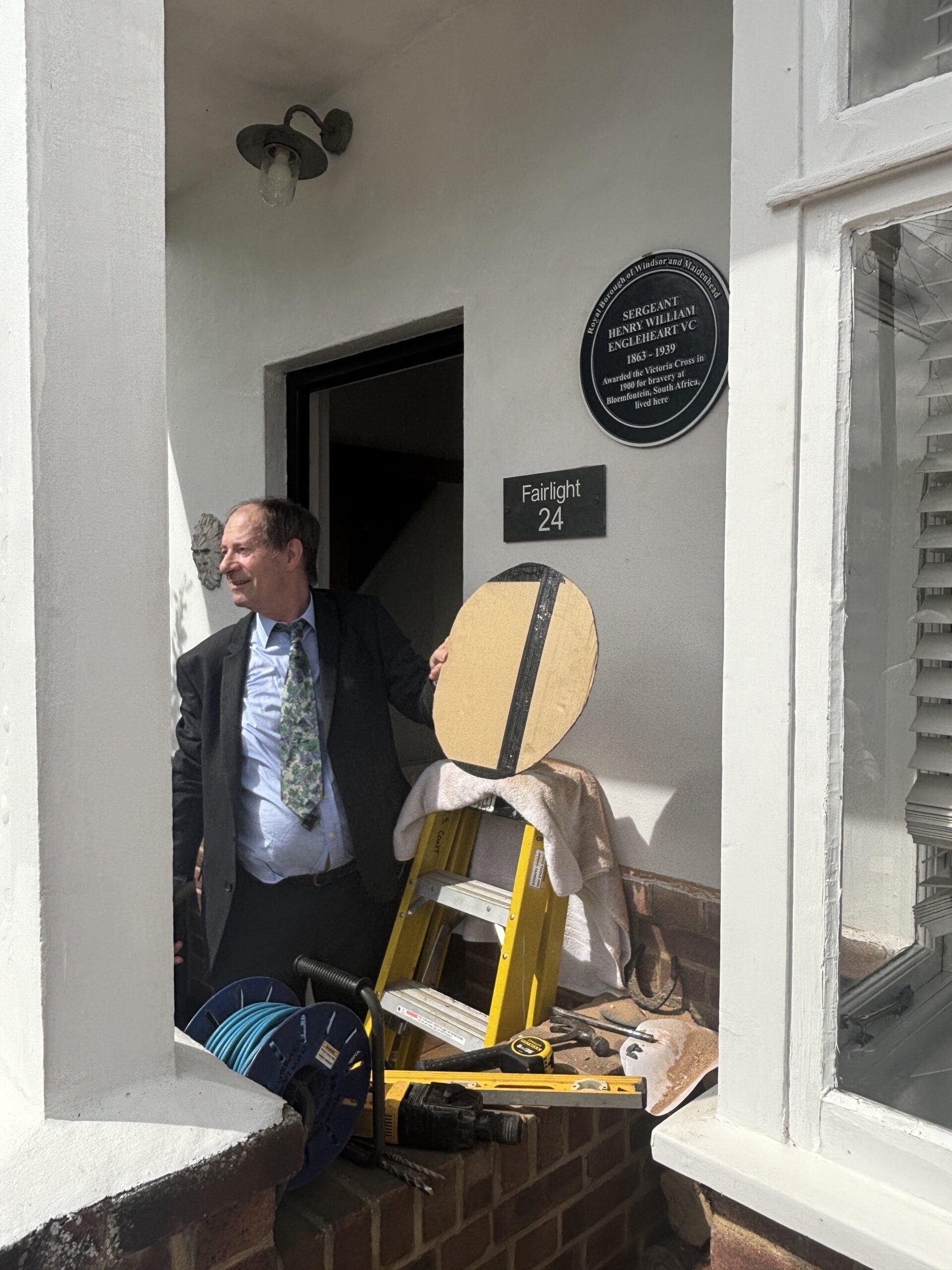
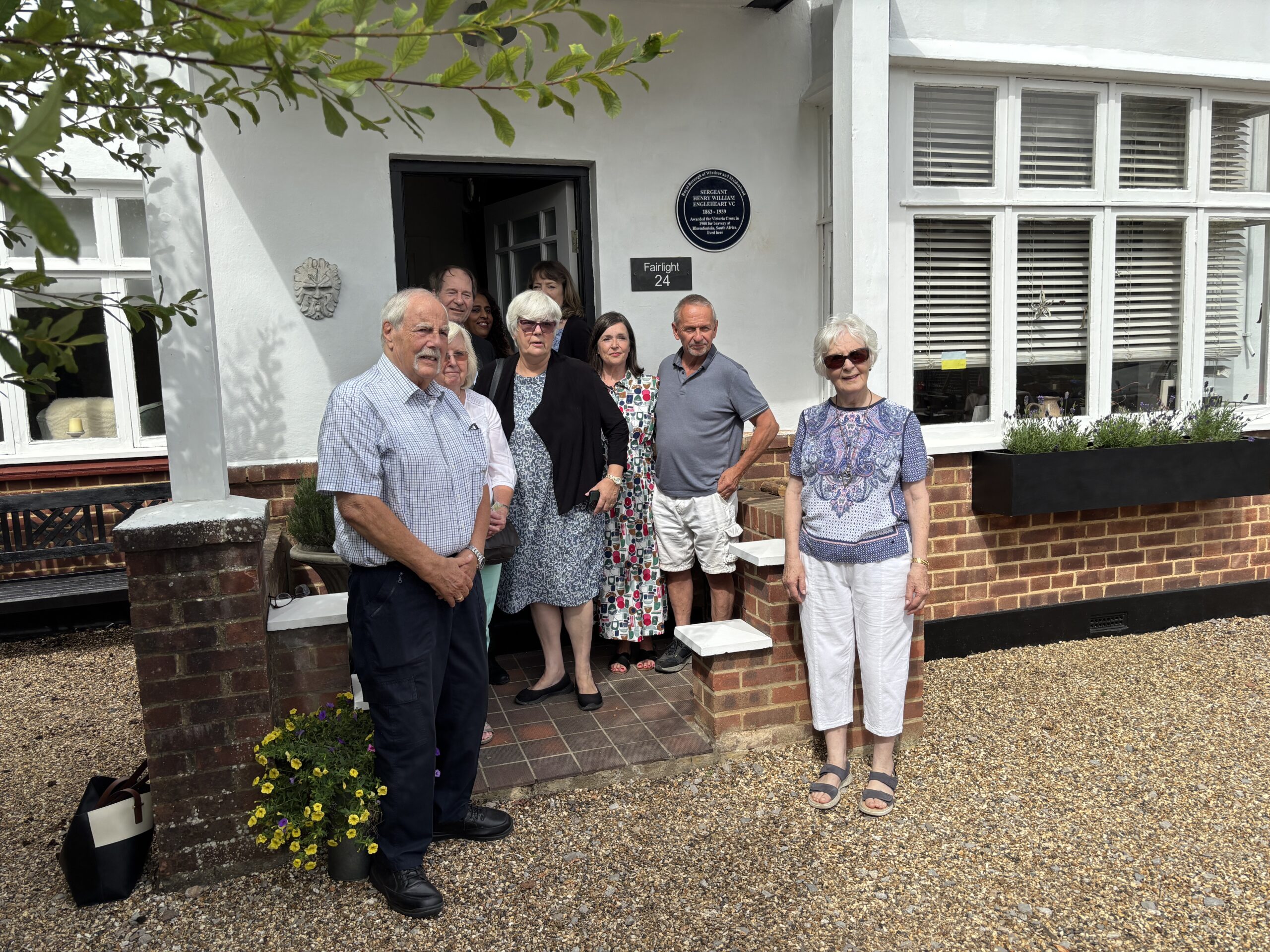
On 17 July 2025, the blue plaque dedicated to Sgt Henry William Engleheart, VC, was installed at his former home, Fairlight in Lawn Close. This followed a formal public ceremony in November 2024 to unveil the plaque in the WI Hall (for details, please see DVS Events 2024. The purchase and installation of the plaque was arranged by Datchet Parish Council and it was unveiled in situ by local historian Derek Hunt, who first brought Engleheart’s story to the attention of Datchet Village Society (DVS). With DVS’s support, the application for a plaque was successfully approved by the Royal Borough of Windsor and Maidenhead. Derek was joined at the unveiling by his wife, Barbara Hunt. The event was attended by members of DVS including Marjorie Clasper, Glenda Croft, and Alison Crampin, along with their partners Jim Croft and Allen Corcoran, and Sonia Masikito, the clerk of Datchet Parish Council. Also present were Jacqueline and Gary Trood, whose family home is the former residence of Sgt Engleheart and now the site of the plaque. We are especially grateful to them for their support and permission to install the plaque on their property. Our thanks also go to Dean Smith, who installed the plaque on behalf of the council.
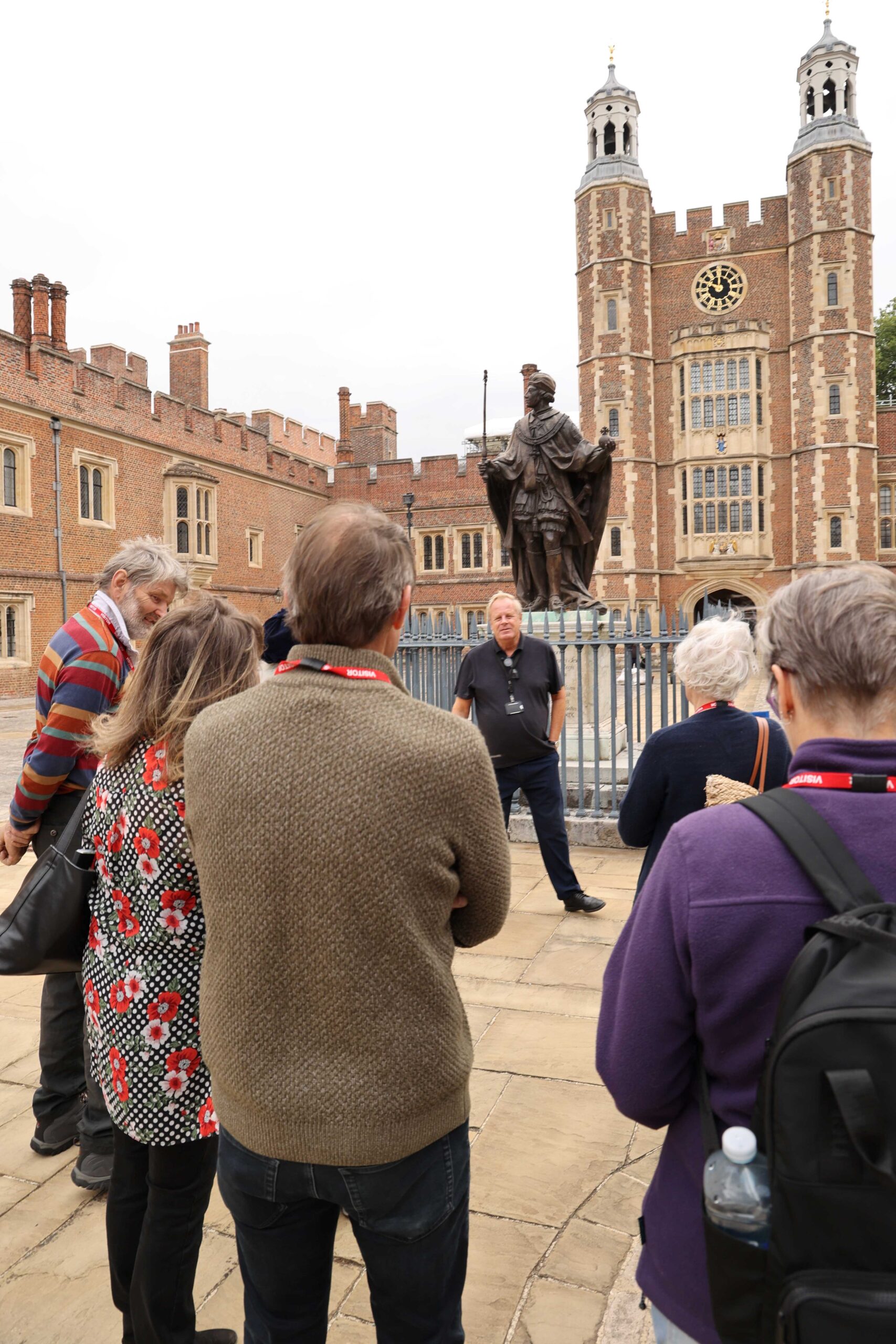
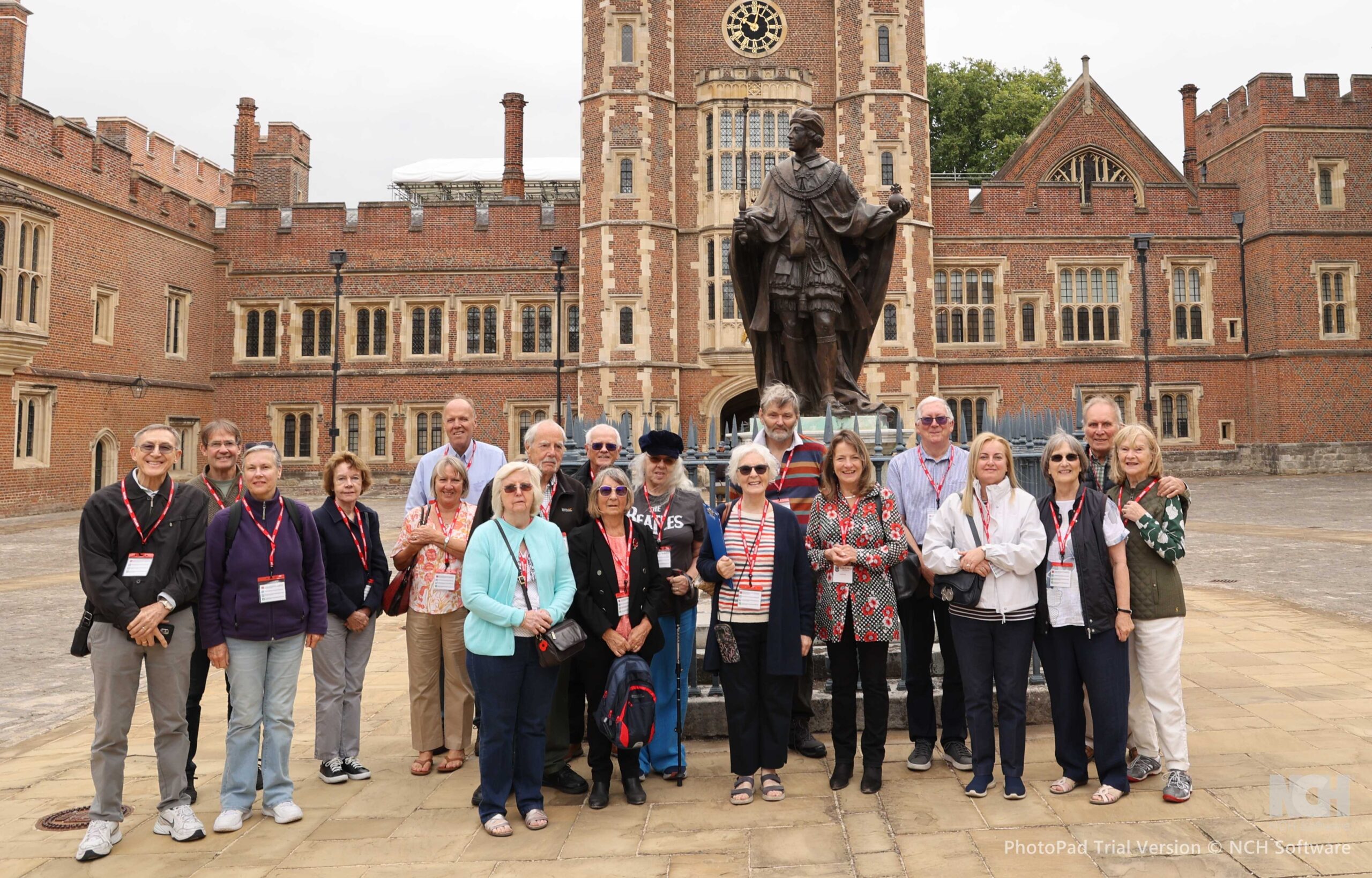
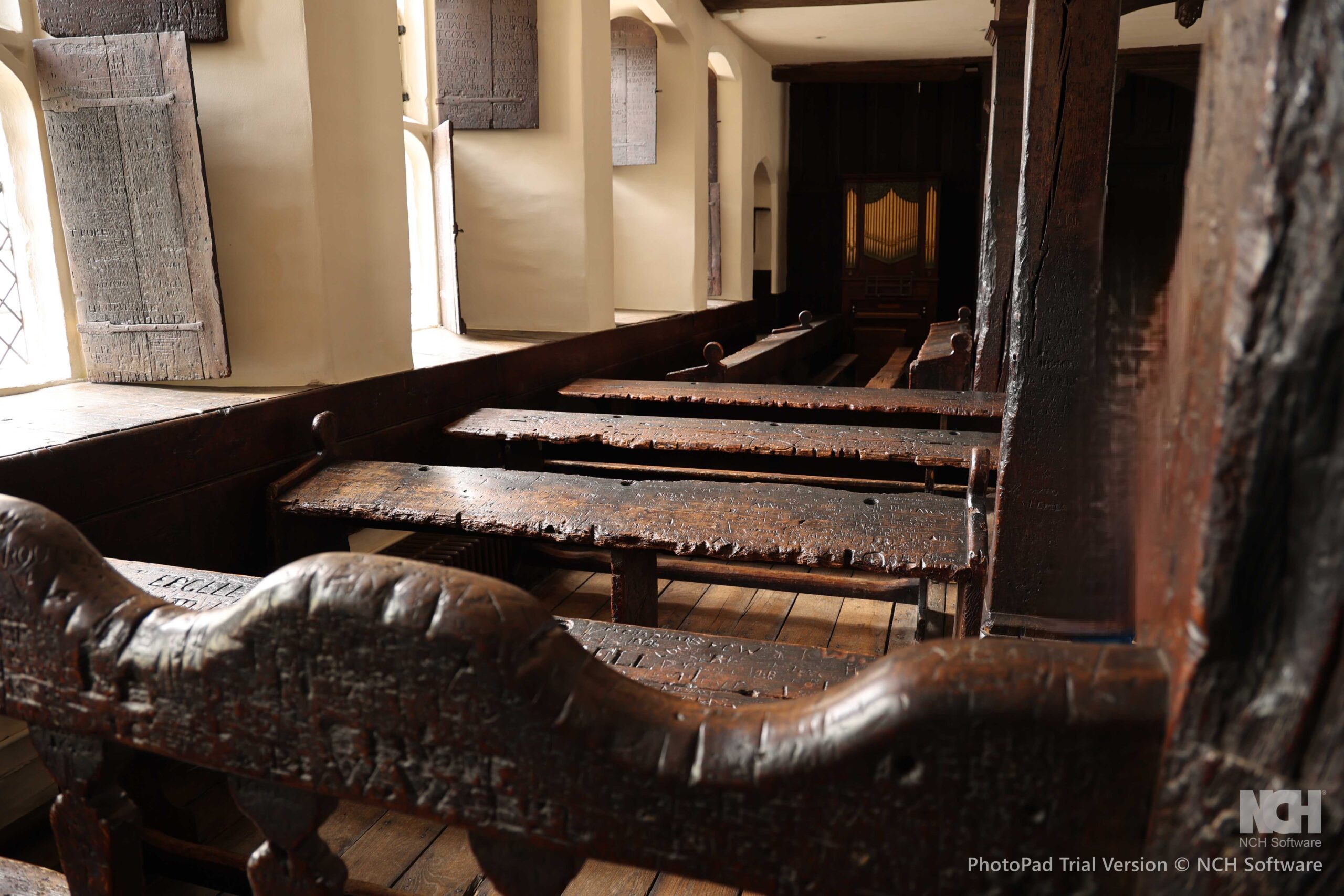
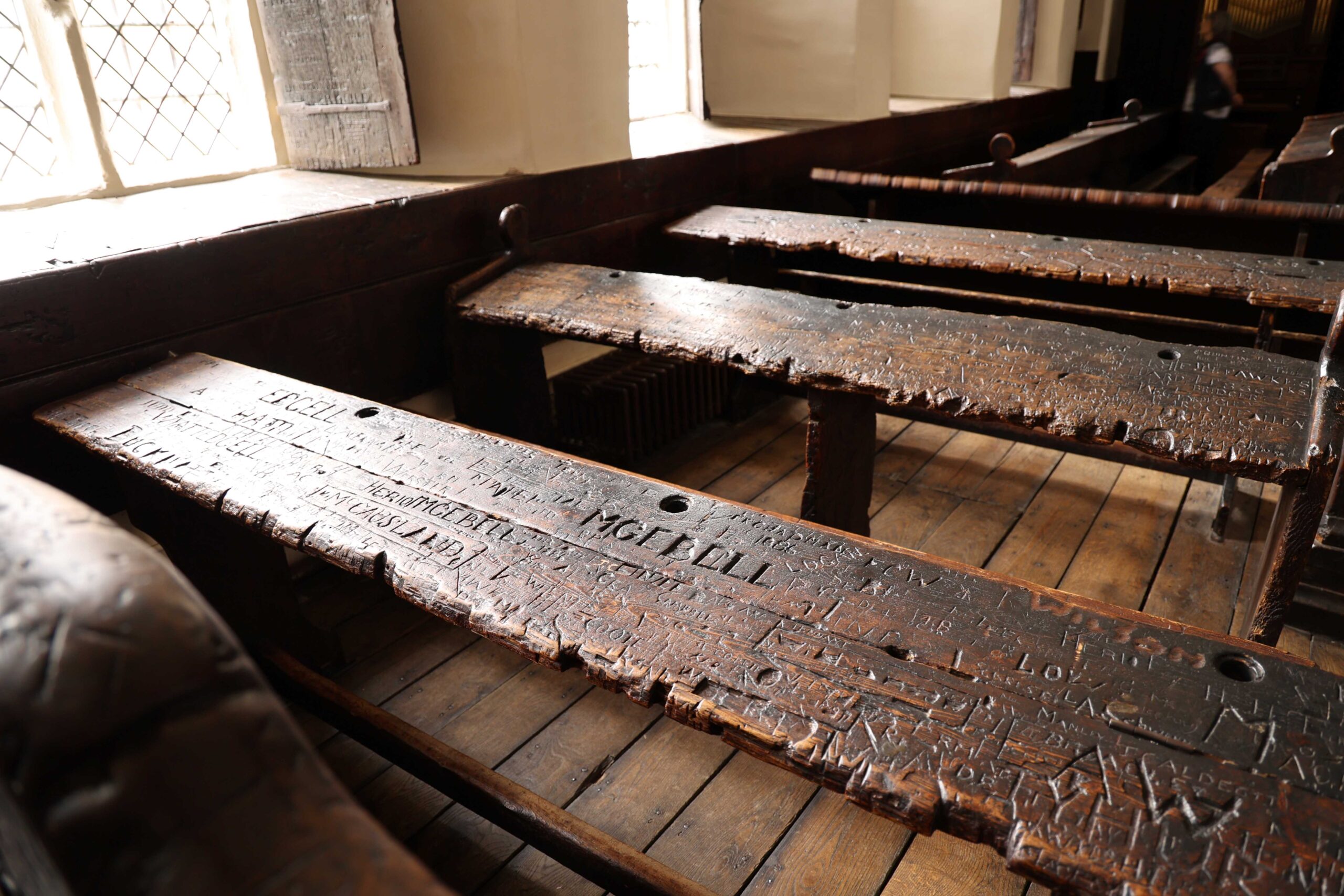
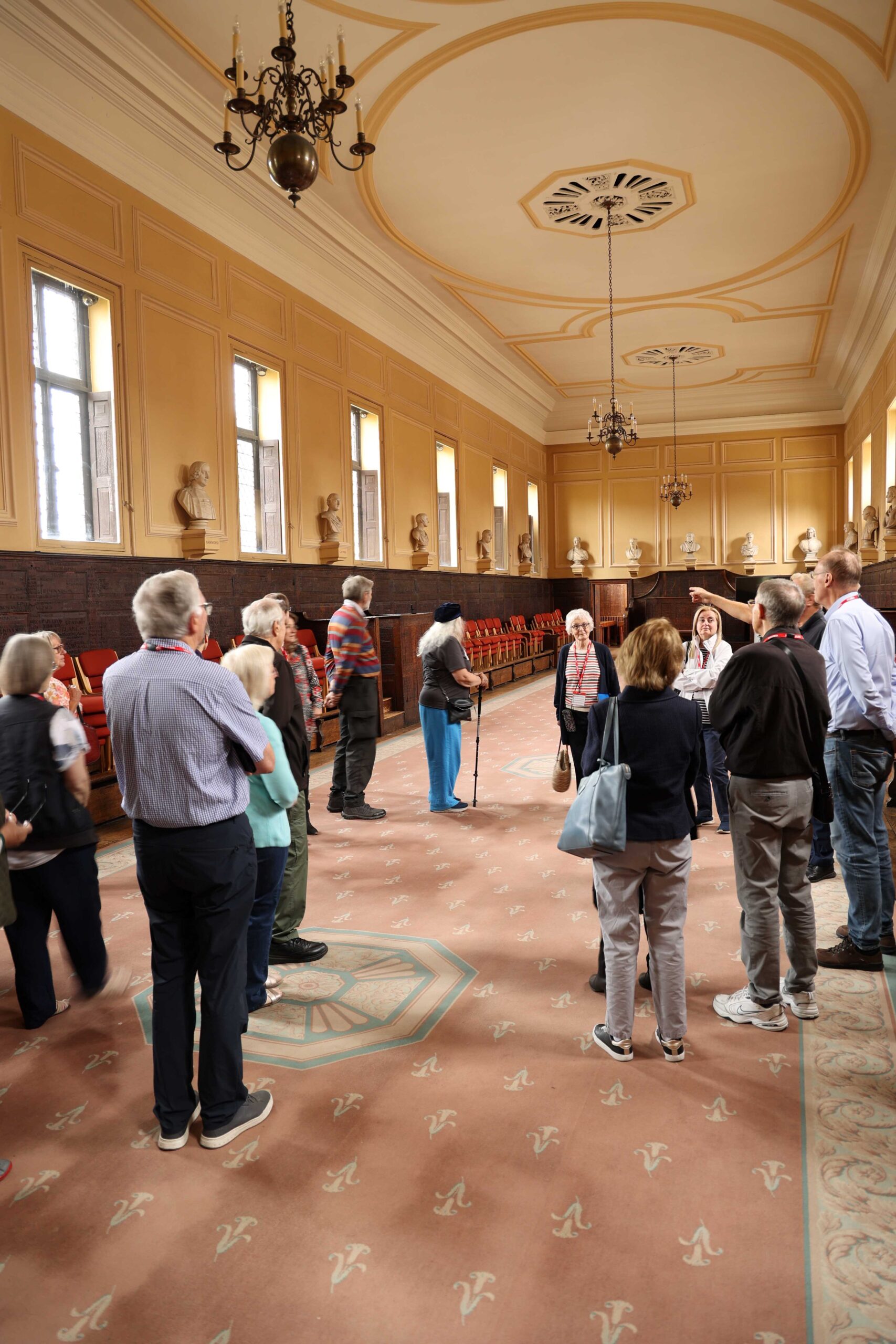
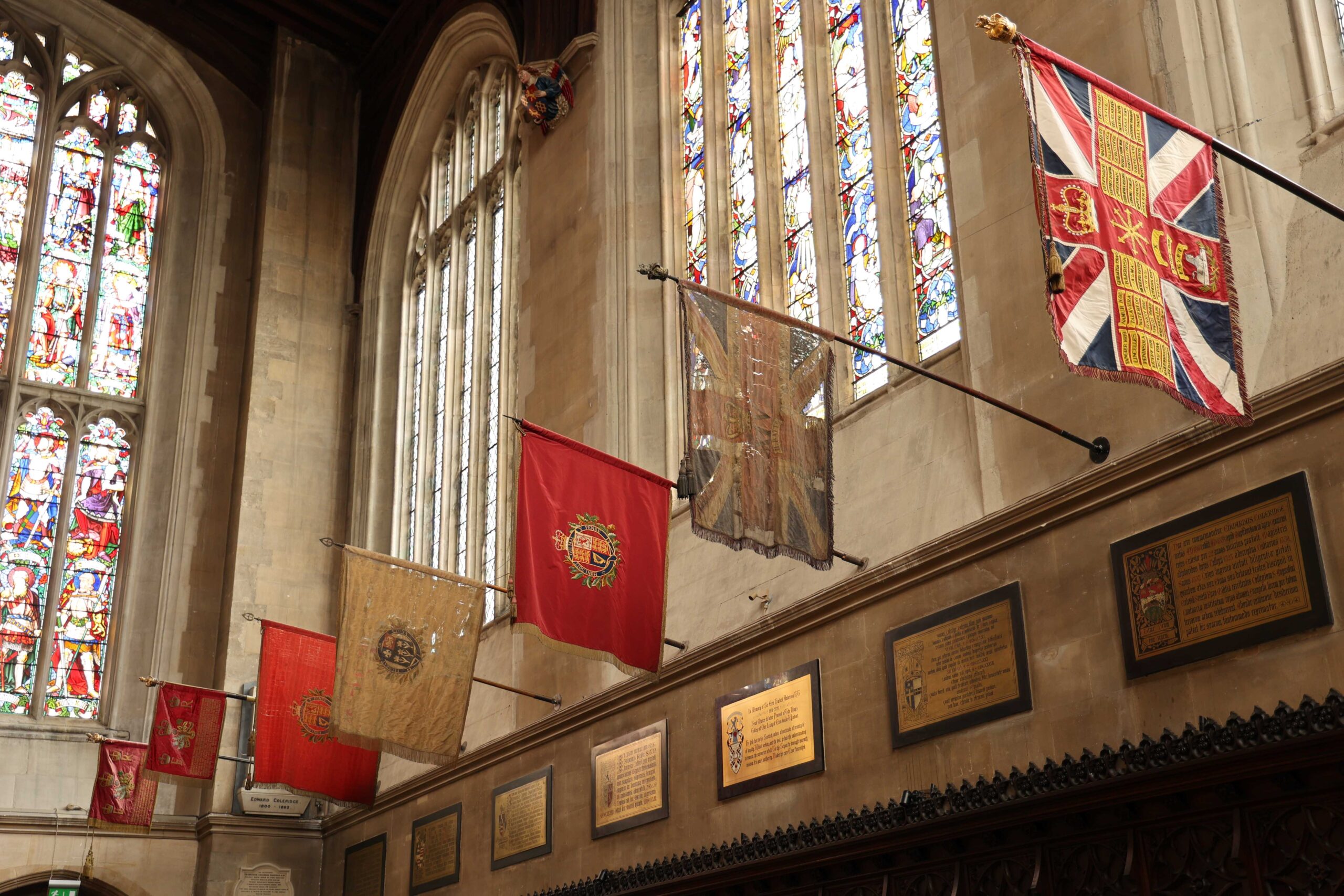
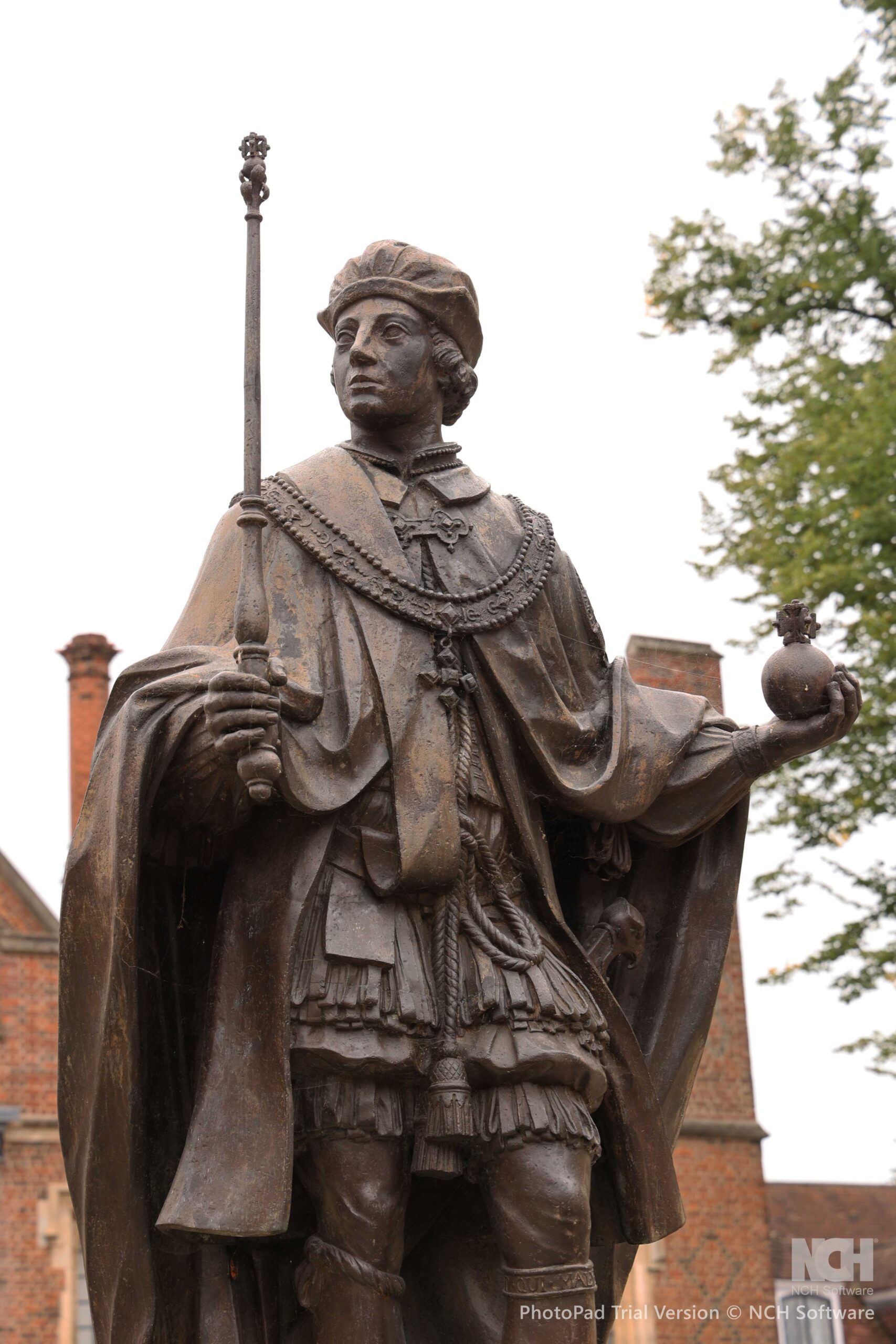
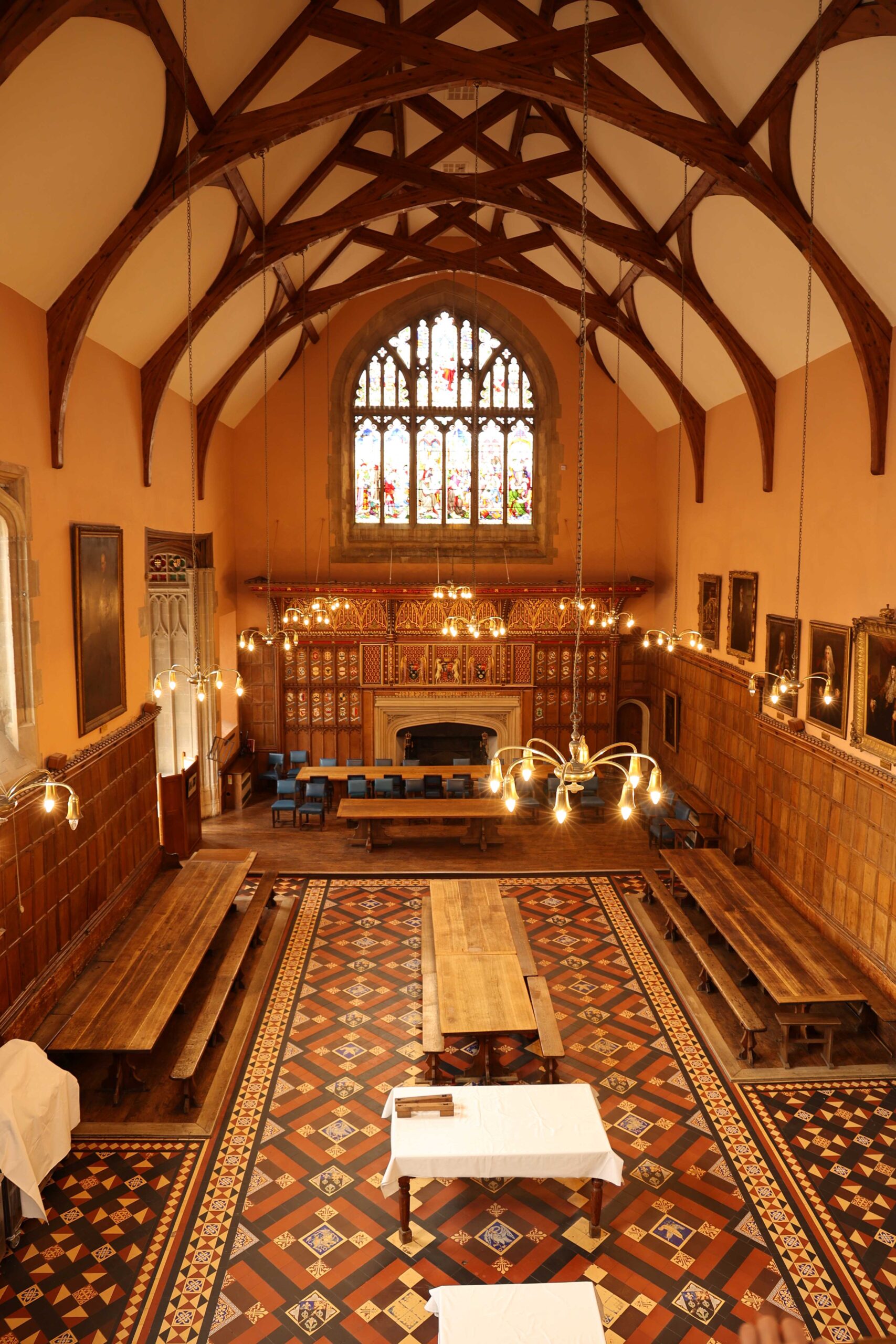
PRIVATE TOUR OF ETON COLLEGE HERITAGE BUILDINGS, 21 AUGUST
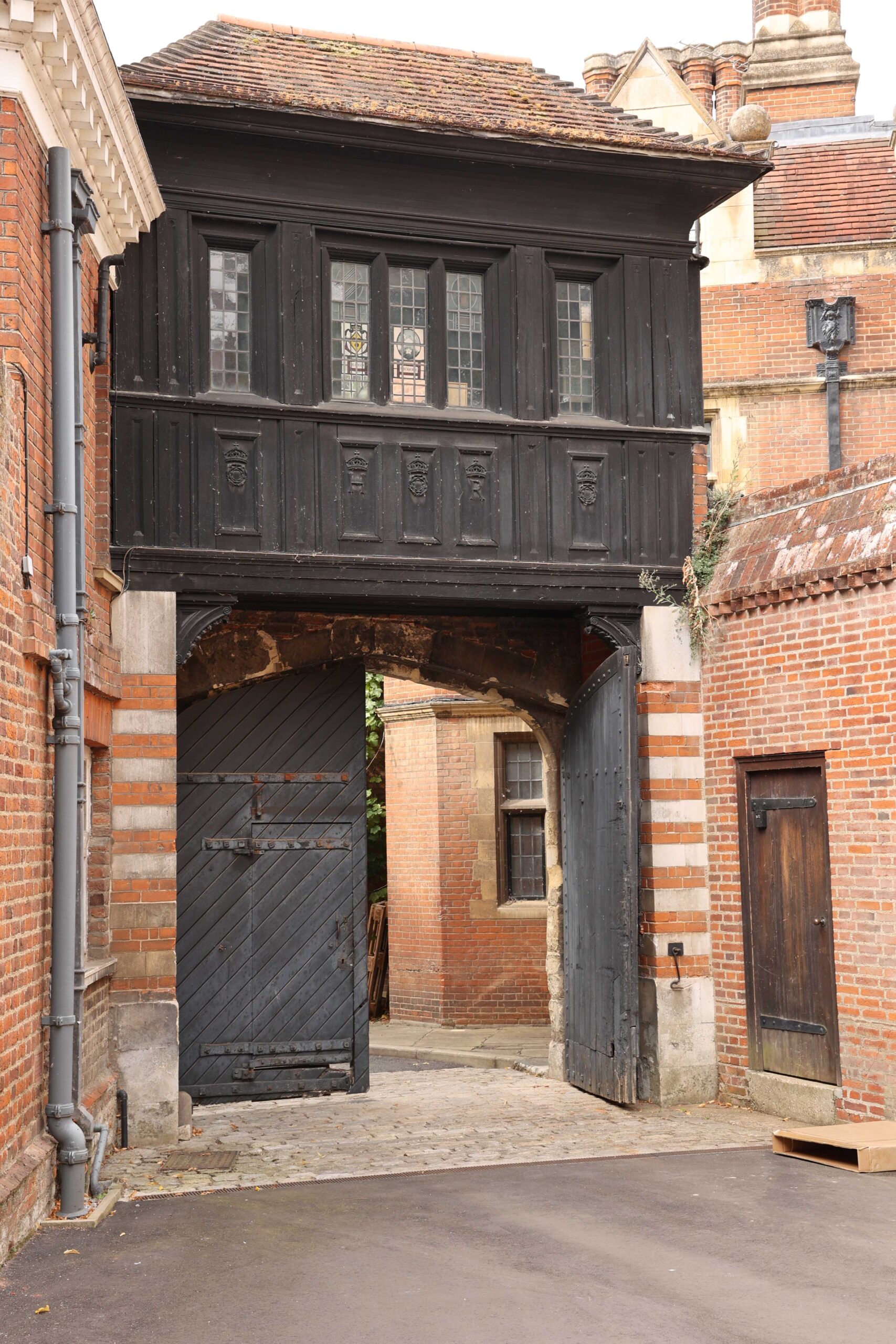
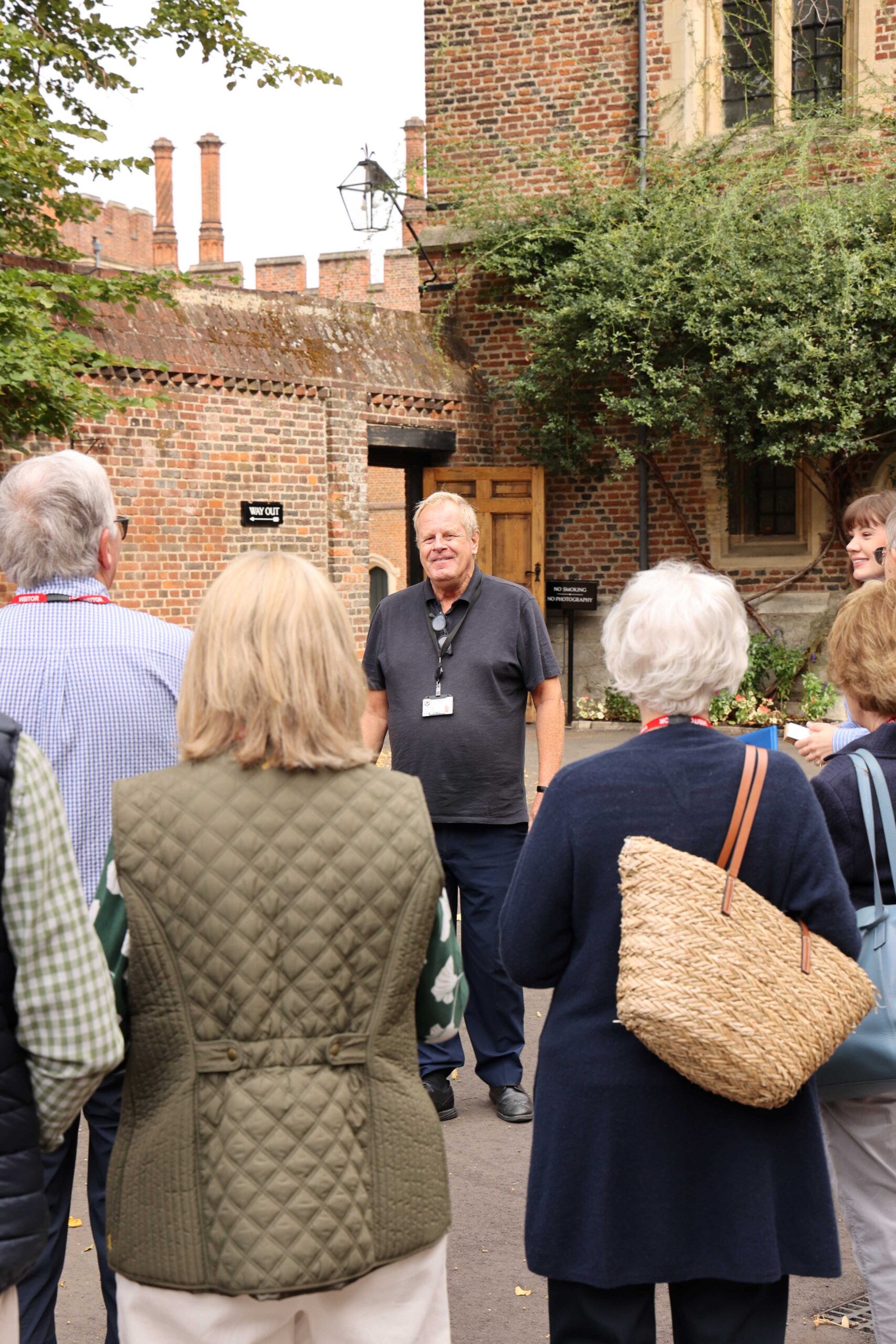
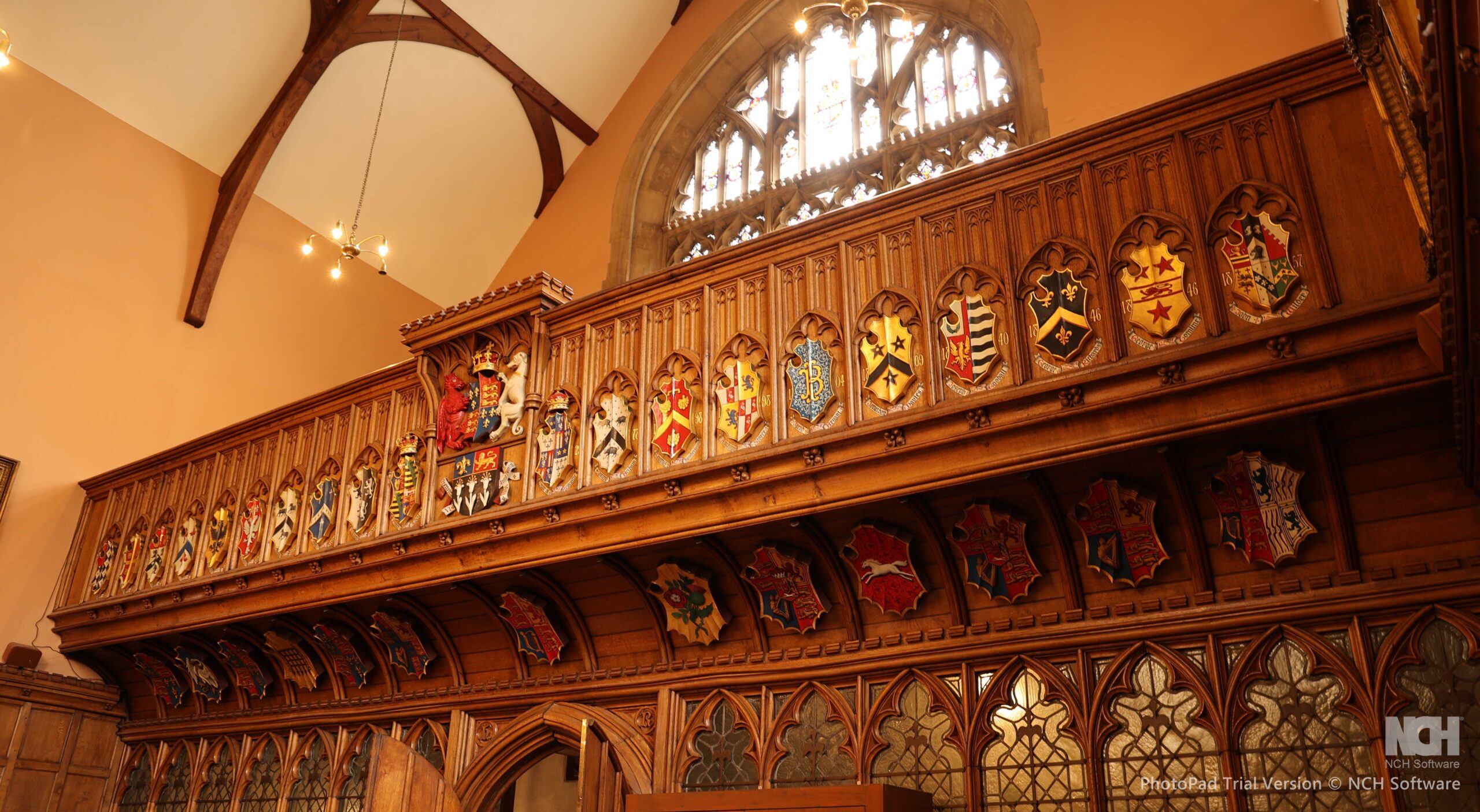
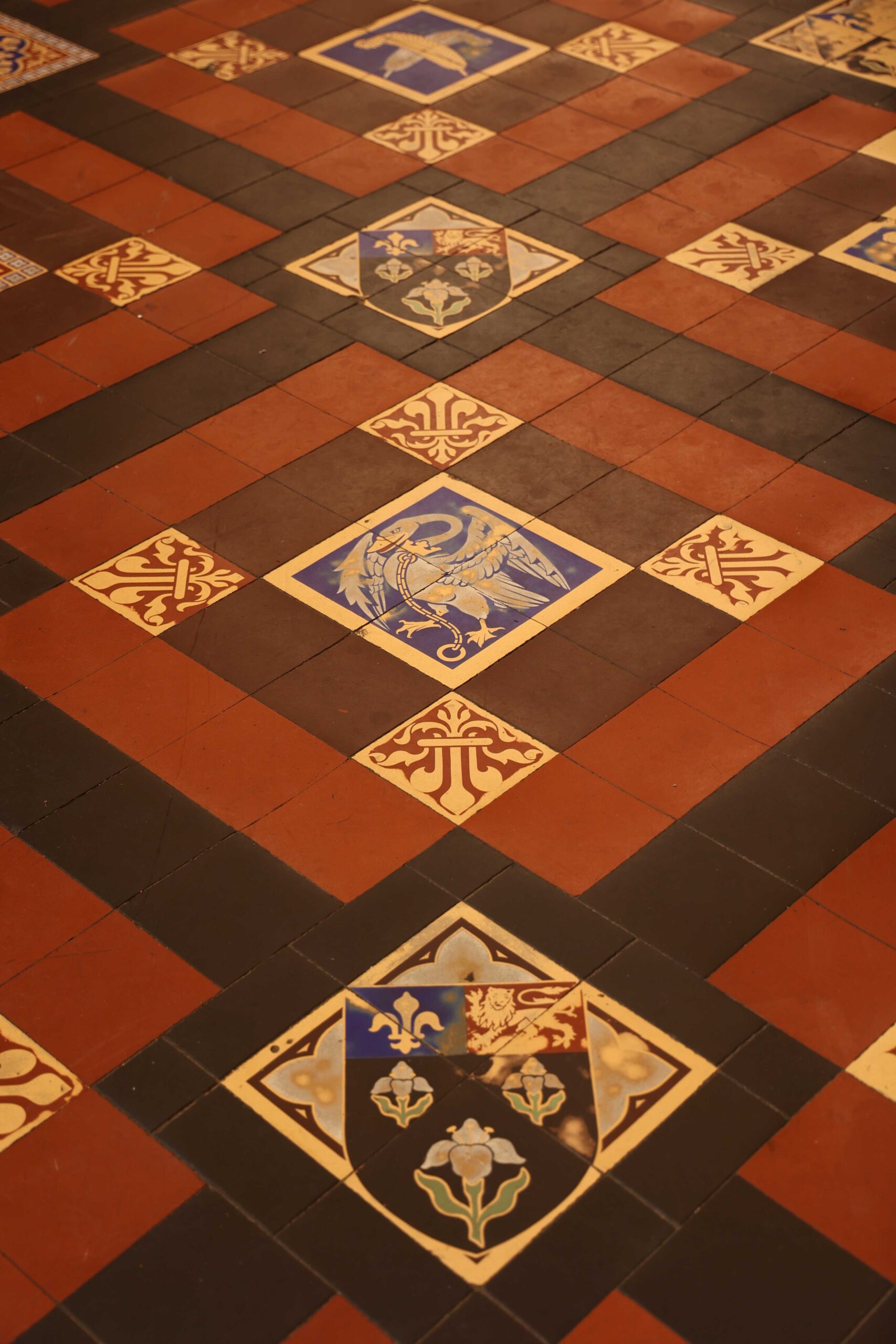
This walking tour, organised especially for DVS members, covered a general history of the College and some of the main private spaces across the Foundation Buildings. The visit included School Yard, College Chapel, Upper School, Lower School, College Hall, the Dining Hall (which is rarely viewed by the public), and the Museum of Eton Life.
THEATRE ROYAL WINDSOR 10 November
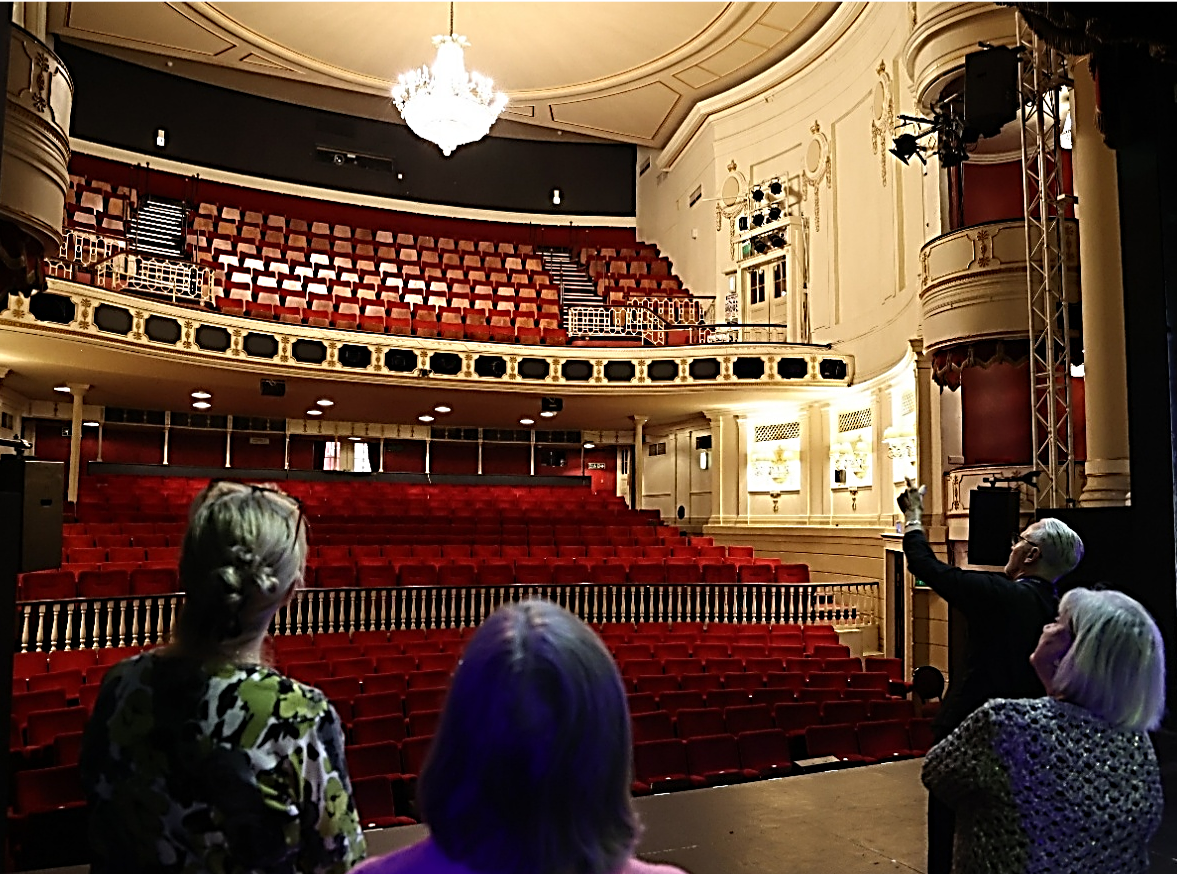
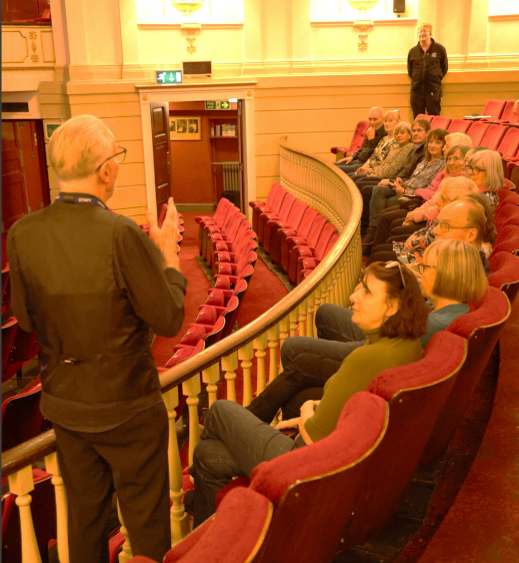
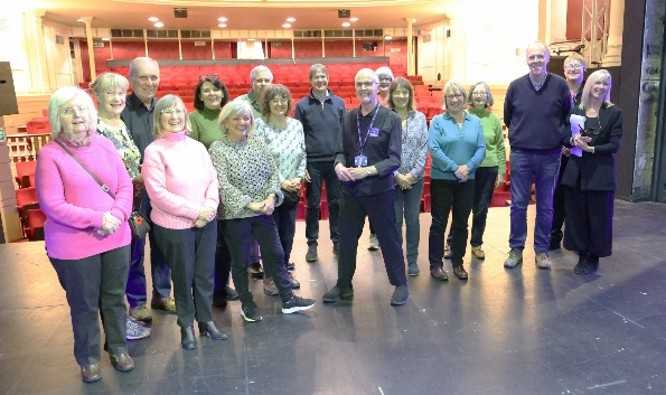
On a rainy day in November, a group of DVS members visited the Theatre Royal for a behind-the-scenes tour. We were particularly lucky with our timing as the production team and cast were away at panto rehearsals which meant we had access to areas not normally included on a tour.
We took our seats in the front row of the Royal Circle while our guide, David, told us about the history of the theatre. With the curtain raised and no scenery in place, we had a rare view of the entire stage. (Interestingly, before a fire destroyed the theatre in 1908, the seats faced the other way, towards a stage on the Castle side of the building.)
John Counsell, whose statue is in the foyer, started working at the theatre in the 1930s when it was being run, briefly, as a cinema. He made several attempts to form a repertory company with very little money. Finally, in 1938, he succeeded: from the moment King George VI and Queen Elizabeth attended a performance of The Rose Without A Thorn, the Theatre Royal and its company were accepted again as an essential part of the Windsor scene.
David told us that there used to be a Royal Box (stage right) but the Queen Mother preferred to sit in the front row of the Circle because the view was better. A box on the other side of the stage is named after John Counsell’s daughter, Jenny. As a child, she was allowed to sit there to watch her very first play, Joan of Arc, in which her mother, Mary Kerridge, played the title role. When Joan was burned at the stake, Jenny screamed the house down and the performance had to be stopped. Ever since then, it’s been known as the Jenny Counsell Box.
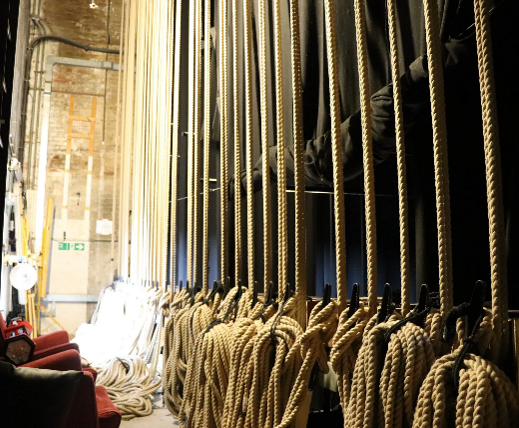
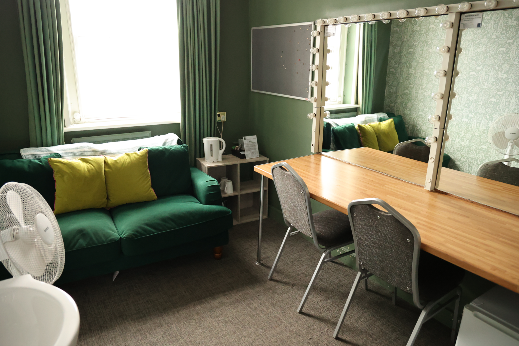
| Windsor is one of the very few theatres still operating rope-system flies for moving scenery. The system was similar to that used to hoist a ship’s sails so, in the past, the job was often done by sailors who would whistle commands to each other. (This is saito explain why people in theatres don’t whistle; in case a piece of scenery comes flying down!) As part of our visit, we also had a look beneath the stage, peeked inside the dressing rooms backstage, and visited the Top Wardrobe on the uppermost floor where costumes were being made. We also learned about two ghosts said to haunt the theatre! |
Read more about the history of the theatre in Windsor from 1706 on the Theatre Royal’s website